|
�
�

�
This bimonthly
e-news is made available
to further the mission:
�
�To
help organizations increase employee and system potential to produce
results.�
�
�
�
We encourage sending this to others so they may benefit from the information
provided.�
�
If you know others who would like to subscribe to this newsletter, please
forward this issue so they may
click here to subscribe.
�
To
remove your name from e-mail list,
click here to unsubscribe.
�
To
review past newsletters,
click here for archives. �
If you would like to reprint
an article or have a similar article written for your newsletter, please contact
the newsletter editor.
� � �
Providing:
Classroom Delivery,�
Communication Publishing,
Consulting Services,
Instructional Design,
Keynote Addresses,
Meeting Facilitation,
Newsletter Articles,
Productivity Training,
Seminar Speaking,
System Support,
and Team Building.
�

�
� Copyright 2010
���� Shirley Lee
All Rights Reserved
www.ShirleyFineLee.com
~
2bproductive.blogspot.com |
�
Fortune 500
companies that use
Six Thinking Hats report that their teams are more productive and now
invest 50% less time in meetings.�
�
�
It is
important to remember that most new teams will take awhile to adjust to
working together and understanding their roles.� Every team will go
through 5 stages, but the speed of transition time may be different based on
experience and leadership.�
�
Bruce Tuckman referred to the stages of team
development as:� 1.Forming, 2.Storming, 3.Norming, 4.Performing and 5. Adjourning/Transforming.
�
Thomas Quick called them:� 1.Searching,
2.Defining, 3.Identifying, 4.Processing, and 5.Assimilating/Reforming.
�
For a detailed description of what occurs during
each of the 5 stages, review the article titled
The Five Stages of Team Development by Shirley Lee.
�
For more ideas on making the team development
process more effective, review the list of
team building and project
management articles at
http://www.shirleyfinelee.com/Articles_Ezine.htm#TB.
�
�
Monica Cornetti
notes problems team leaders may encounter with teams during first 4 stages
of development and suggests team-building activities to do with team on
2bproductive blog.� See
her post titled
Leadership in Stages of Team Development for links to these
activities.�
�
�
Do a paper or computer
based assessment completed anonymously by each member to get an idea of team
progress in order to see where more training or coaching is needed.�
Compile the results using a spreadsheet to track progress over the lifetime
of the team.� Ask team to decide if they want to conduct their progress
assessments on a quarterly of bi-annual basis.�
�
To download a free team
evaluation form and/or a meeting evaluation for team use, visit
http://www.shirleyfinelee.com/FreeForms.htm.�
How to interpret the
results is located near the bottom of the download page.
�
As an alternative to a
form-based assessment, check out the on-line article where Ken Thompson
shares 15 techniques for
Developing an Effective Team, regardless of whether the team will be
located together or is to be a virtual team.
�
�
"Team-player: one who unites others
toward a shared destiny through sharing information and ideas, empowering
others and developing trust." - Dennis Kinlaw
|
�
�
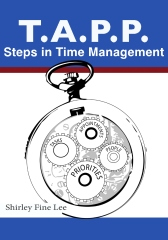
COMING SOON -
A NEW BOOK!
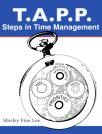
T.A.P.P. Steps in Time Management
ISBN# 1-4536-1151-7
�
This is a must-have
guide for personal
time management
in the 21st century.
�
Watch for Launch Announcement when new
book is on Amazon in August� to be eligible for free
gifts with purchase on the launch date.
�
Watch the
TAPP author
�Interview on YouTube
about this
new book now.
�
Also order the book listed below
on laucn date and
your order may be eligible for�
FREE Supper Saver Shipping!
�
MEETING MANAGEMENT
BOOK�
�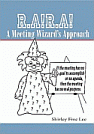
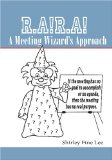
�R.A!R.A!
A Meeting Wizard's Approach
ISBN# 1-4196-5367-9
�
A no-nonsense and
much-needed self-paced guide to planning and conducting meetings
so that they are as
productive, effectual, and smoothly run as possible.�
�
Order at:
www.Amazon.com
�
|