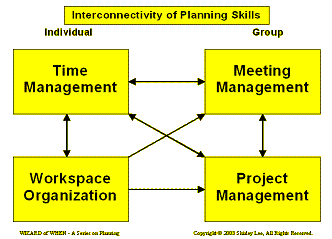
|
Description |
Workshop Outline |
Workbook Outline |
| �
Time
Management
Problem: Most people feel they would be more
successful if they could just figure out how to make the time they have work
for them better.
Solution: To enable people to be better time
managers, this quick unit is a study in time management principles and
related skills using T.A.P.P.� steps. In just a few hours, attendees will
learn: how to remember appointments and prioritize a task list, and what may
detract from their time and how to deal with it. The handout will includes
sample formats that may be used to practice the principles and skills
outlined.
Magic:� "When you get
control of your time, it will magically seem like you have more time to
accomplish important tasks."
� |
�
- Opening
- Objectives & Agenda
- Time Management Style Profile
- Basic Principles & T.A.P.P. Steps
- Tasks & Prioritization�����������
- Individual Practice�������������
- Appointments & People
- Time Log
- Individual Practice�������������������������
- Interfering Problems
- Tips�����������
- Self-evaluation�������������������
- Closing
- Question & Answer�����������������������
- Review & Additional Information
�
Estimated training time:
|
�
Click
cover above to order Paperback Book
�
64 page book
�
T.A.P.P.
Steps in Time Management
�
Click here to view
Book's
�Table of Contents
without going to
Amazon's
Search Inside This Book
�
|
|
Workspace
Organization
Problem: Things are cluttered and
needed items can not be found in a timely manner.
Solution: Using this unit in about an
hour learning will include how to plan and implement an organization project
for any area or item type using the S.I.F.T. method. Various types or
organization problems are discussed.
Magic: "When you
organize your workspace, you accomplish things more quickly by knowing where
to find necessary items." �
� |
- Opening
- Objectives & Agenda
- Basic principles & S.I.F.T Method
- Scheme, Initiate, Format, and Triumph
- Problem Areas
- Discussion
- Closing
- Questions & Answers
- Review & Additional Information
�
Estimated training time:
� |
�
� |
| �
Meeting
Management
Problem: Some people do not enjoy attending
meetings because they feel little gets accomplished and therefore their time
was wasted.
Solution: People need to know meetings are an
important way to get ideas shared and important tasks accomplished. This
short unit is designed to help make meetings more effective by offering a
quick look at basic meeting management and the related skills needed through
the R.A!R.A! approach and other tips. In just a few hours attendees will
learn: the necessary meeting roles, how to get the right people there, how
to start and end meetings on time, how to accomplish more in each meeting ,
how to insure meeting ideas and decisions are captured, how to accomplish
needed tasks and follow-up outside the meeting, what may detract from
meeting and how to deal with it, and how to improve future meetings.
Magic: "When
you have control in meetings, not only do you accomplish more in less time
but you also bring a skill that can be learned by others through
observation.�"
� Variations include:
Holding Effective And Efficient
Team Meetings Taking
Excellent Meeting Minutes for Team Scribes and Admin Professionals
Facilitating/Leading Productive And
Interactive Meetings for Business Leadership � |
�
- Opening����������������
- Objectives & Agenda
- Basic Principles & R.A!R.A! Approach
- Meeting Purpose Statement�����������
- Meeting Types
- Preparation
- Facilities, Equipment, & Materials��
- Set-up & Take-Down�������
- Checklist
- Invitations & Reminders
- Roles��
- Agenda
- Open, Close, & In-between�����������������������
- Agenda (3 T�s method)
- Practice Meeting
- Records����������
- In Meetings (Boards & Flipcharts)
- Actions��(3 W�s method)
- Meeting Minutes����
- Practice Meeting
- Beastly Problems
- Practice Meeting
- Meeting Evaluation
- Closing
- Question & Answers���������
- Review & Additional Information
Estimated training time:
-
4 hours without
Practice activities
-
5 hours with
Meeting Practice activities
-
6
hours customized Team Practice
-
Optional Add-ons for Full-Day Training
2
Hours for Train the Trainer/Deployment Planning
2-3
Hours on Tools for Facilitators
|
�
�

Click
cover above to order Paperback Book
�
64 page book
�
R.A!R.A!
A Meeting Wizard's
Approach
�
Click here to view
Book's
�Table of Contents
without going to
Amazon's
Search Inside This Book � |
| �
Project
Management Simplified
Problem: Many people feel they could be more
successful at planning and managing projects if they could just learn how
the process works.
Solution: This unit will help guide new project
managers and team members through the O.P.I.E. process of simplified project
management. It will help them better understand how the planning and
controlling of projects and resources should be done. The workbook for this
unit includes sample formats that may be used to practice the principles and
skills learned, as well as for future planning and budgeting purposes.
Magic: "When you
properly manage a project, you may become considered wise and skilled in
this area and then be asked to manage other projects, which increase in
importance."
See also work team version:
Simplified Project Management For Teams
�
� |
�
-
Opening����������������������������������������������������
- Review Objectives & Agenda
- Basic Principles & O.P.I.E. Process
- Project Roles & Types������������������
- Open Project
- Objective & Analysis�
- Preliminary Approval���������
- Project Manager
- Team Activity
- Plan Project
- Specification
- Schedule
- Resources
- Budget
- Plan Approval�������
- Team Activity
- Implement
Project��������������������������������������������������������������������
- Project Team���������������������
- Plan Execute & Monitor
- Communication
- Progress Reviews & Performance Appraisal����������
- Team Activity
- End Project
- Administration & Celebration
- Compensation & Evaluation
- Team Activity
- Meetings
- Meeting Roles�������
- Agenda, Records, & Actions
- Hints
- Risky Problems
- Closing
- Question & Answers���������
- Review & Additional Info
Estimated
training time:
|
�
�
Click
cover above to order e-Book
|
About the
Author
(click here to see workbook
outlines)
| Shirley Lee has been a strong advocate of time
effectiveness principles, such as creating a list of tasks to be done and then
scheduling the time to do them, since 1987. To help others learn to better
utilize their time, Shirley spread her enthusiasm for the topic by teaching time
management classes and seminars beginning back in 1989. Shirley Lee began using organization
principles and methods before 1975 in both her personal and professional life.
She believes in maximizing space and keeping things organized for better
efficiency and neatness. To help others with space utilization and work
organization, Shirley began formally coaching on-the-job in 1985.
Shirley Lee began her formal training as a facilitator in
1992. She has facilitated many different types of meetings including
these: vision/mission/goal planning, problem solving, process mapping, change
initiatives, reorganization, and quality improvement. She started delivering
classes and seminars on meeting management to individuals, teams, and
organizations in 1994.
As far back as 1986, Shirley Lee has been involved in many
major project activities: including information systems design, process
development, and quality improvement. She began actively exercising the role of
project team leadership and planning project management in 1993. Shirley
continued to polish her skills and eventually started helping others to learn
some project planning basics in 1996 through both seminars and self-teaching
materials.
Shirley Lee holds a degree in Business Administration. She
spends most of her professional time developing productivity tools/programs,
presenting workshops, facilitating team building and meetings, as well as
writing. Shirley considers this fun too. However, in her personal time she
enjoys her family, reading, gardening, and needlecrafts.
� |
Taking Excellent Meeting Minutes
Participants who have a professional responsibility to improve the services
and documentation provided for business meetings will gain knowledge of
minutes as the key historical record of what happened in a meeting.
Participants will understand their role as minute-taker and how the
production of minutes can be most beneficial to the people reading them.
Benefits: If your organization seems to repeat the same meetings over
and over, the problem is most likely tied to ineffective or lack of record
keeping. Having the skills to provide a good history of each meeting can
save company managers and employees time in future meetings and will insure
the necessary actions outside the meeting are completed so that the
productivity of meetings is also improved.
Learning Objectives:
- Understand the key elements to put at the beginning of minutes
- Learn methods for recording meeting discussions
- Know why definitions in documentation are important
- Understand why just recording decisions is not enough
- Know what information that should be put at the end of minutes
- Learn ideas to improve the value of the record-keeper role
�
� |
Facilitating/Leading Productive And Interactive Meetings
It is vital to learn how to plan and control business meetings. This
training will increase the effectiveness and efficiency of meetings by
offering key concepts in meeting management for leaders. Beginning with a
discussion of the �Ten Mistakes Meeting Leaders Make�and moving into the
best ways to avoid them. Supervisors and managers will learn: what types of
meetings there are and how to plan each for ultimate productivity; when it
is best to hold a meeting or use another form of communication; how to
increase group participation in meetings; how to recognize a meeting has
gotten out of control and methods for regaining focus, as well as how to
calculate the cost verses effectiveness of their meetings.
** Based on book: R.A!R.A! A Meeting
Wizard's Approach.
Benefits: With the concepts from this training, your meetings will be
more productive and accomplish the goal for having each meeting. In
addition, as managers learn how to facilitate interactive meetings, you will
gain more innovation by tapping into the creativity and ingenuity of all
meeting members.
Learning Objectives:
- Understand the different types and methods for meetings
- Create an effective meeting agenda using 3T�s
- Understand meeting roles and how to assign
- Determine meeting participants and send invites
- Control the flow and productivity during meetings
- Assign action items using 3W�s
- Distribute informative records via minutes
- Learn to control meeting problems early
|
�
| |
�
Click
cover above to order Paperback Book or below for
RARA A Meeting Wizard's Approach Kindle e-Book
Click
cover above to order Paperback Book or below for
TAPP Steps in Time Mgmt Kindle e-book
OPIE Project Planning and Implementation for Team - Only available as Kindle
e-book on Amazon
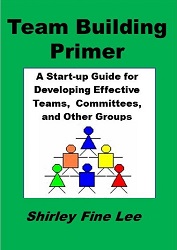
Team Building Primer: A Start-up Guide for Developing Effective Teams,
Committees, and Other Groups
�
�
|