�
|
� |
|
�
� � � �
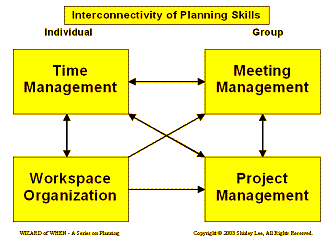
� Unit II - Workspace Organization (unit approximately 16,049 words on 56 pages with forms and examples) Section� -� Title
1.����� Basic Principles a.������ If it is important, find the right place to keep it.� b.����� Organization does not happen unless there is a plan and the time is scheduled.� c.������ If it not necessary, why keep it?
1.����� Configurations with Chart
1.����� S.I.F.T.2 (Significant, Intermediate, Future, Toss)
1.����� Books a.������ Sorting b.����� Hardbacks c.������ Paperbacks d.����� Binders/Notebooks 2.����� Communication/Correspondence a.������ Bills b.����� Catalogs/Circulars c.������ Documents/Reports d.����� Emails/Memos e.������ Forms/Checklists f.������� Letters g.������ Phone (Cellular, Stationary) h.������ Periodicals 3.����� Computers a.������ Desktop b.����� Disks c.������ Files with Naming Examples d.����� Laptop e.������ Monitor f.������� Printer g.������ Scanners h.������ Security 4.����� Equipment a.������ Audio/Video b.����� Copier c.������ Fax Machine d.����� General Equipment 5.����� Files/Folders a.������ Categorizing with Table of Ideas b.����� Maintaining c.������ Storing 6.����� Lighting a.������ Electrical b.����� Natural 7.����� Seating a.������ Guest Chair b.����� Work Chair with Angle Examples c.������ Work Stools 8.����� Shelves a.������ Built-in b.����� Freestanding c.������ Modular 9.����� Storage Options a.������ Baskets and Miniatures b.����� Bins to Tubs c.������ Cabinets d.����� Drawers 10.� Supplies & More a.������ General Supplies b.����� Money Matters c.������ Plants d.����� Telecommuting e.������ Time Devices 11.� Travel a.������ Briefcase/Computer Case b.����� Carry-on Items c.������ Check-in Luggage d.����� Preparation e.������ Shipping 12.� Walls/Dividers a.������ Bulletin Board b.����� Dividers c.������ Hooks d.����� Marking Boards e.������ Noise f.������� Pegboards 13.� Work Surface a.������ Primary b.����� Secondary
1.����� Basic Principles
1.����� Self-Evaluation 2.����� Self-Evaluation Format
1.����� Final Thoughts Poem � Is My Life a Clutter?
1.����� Books 2.����� Web Sites �
� |
� Click cover above to order Paperback Book or below for RARA A Meeting Wizard's Approach Kindle e-Book
Click cover above to order Paperback Book or below for TAPP Steps in Time Mgmt Kindle e-book
OPIE Project Planning and Implementation for Team - Only available as Kindle e-book on Amazon
Team Building Primer: A Start-up Guide for Developing Effective Teams,
Committees, and Other Groups
| |||||||||||||
|
Shirley Fine Lee's purpose is to help people and organizations increase capacity to produce results. Copyright � 2019 Shirley Fine Lee � |